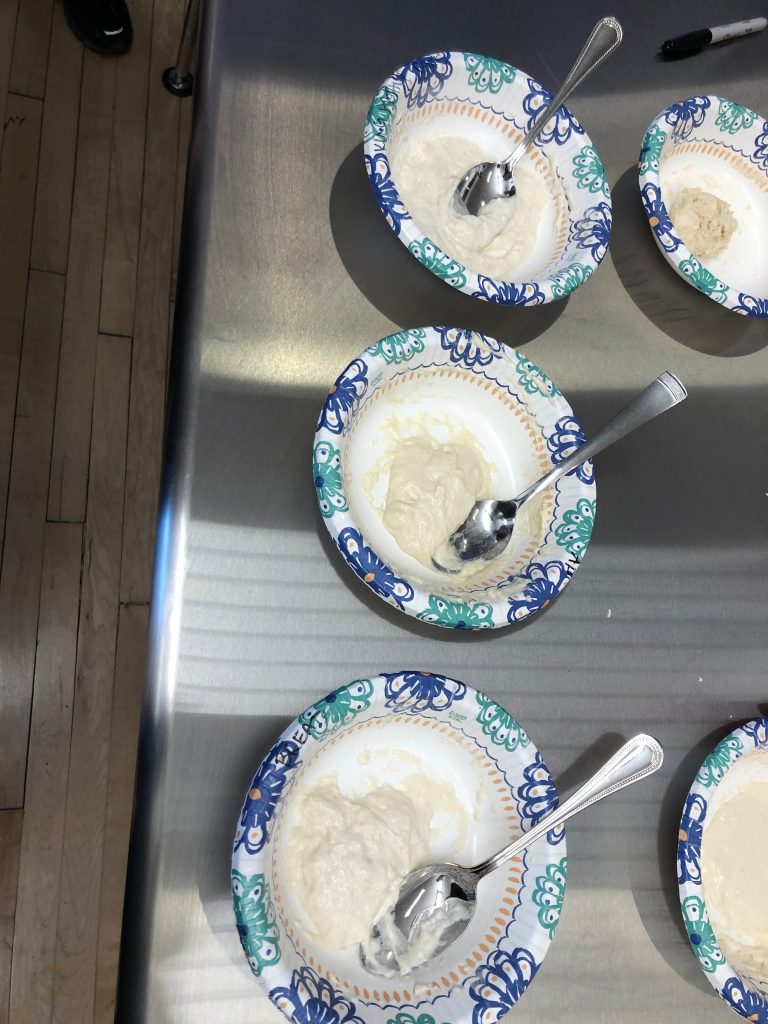
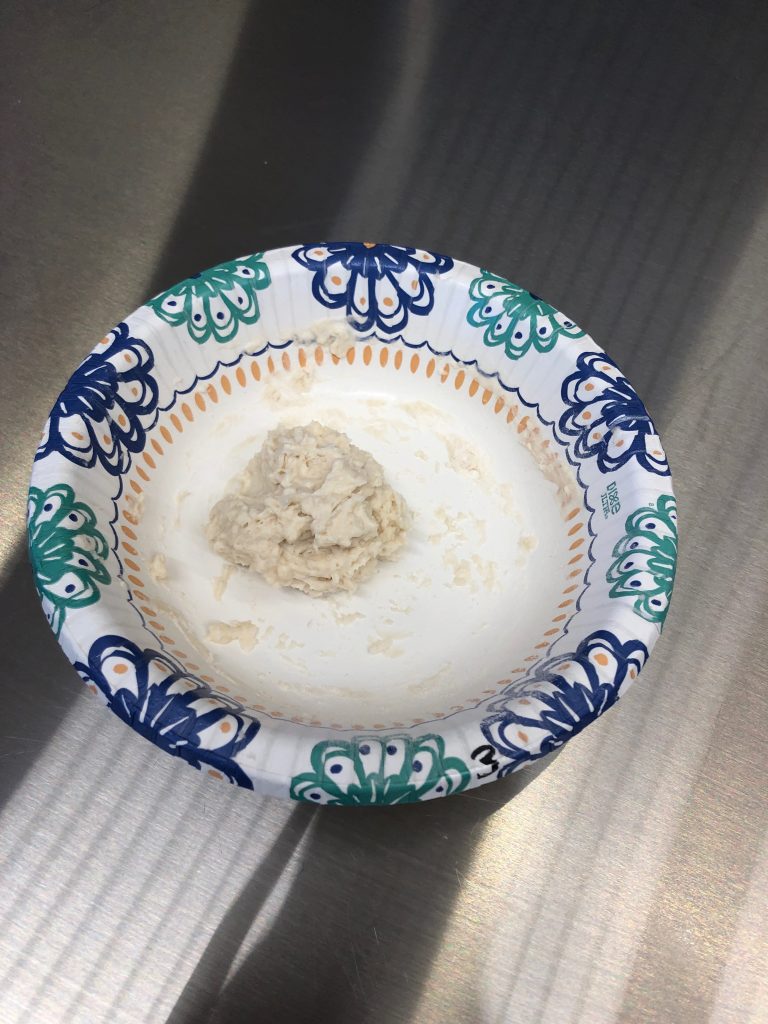
For this week’s lab, Sabrina and I made grissini (breadsticks). We used 3/4 of a cup of all-purpose flour, and 1/4 of a cup of pastry flour, while the other groups used combinations of all-purpose and bread flour.
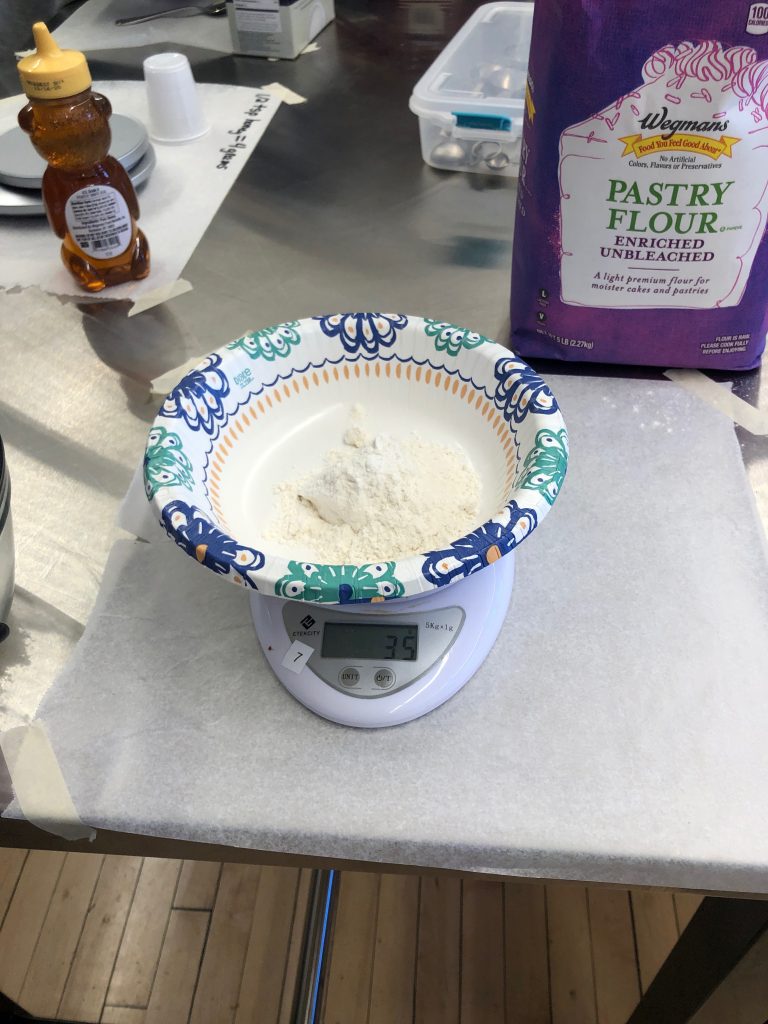
First, we measured our flour by fluffing it and spooning the flour into our measuring cup before leveling it off and weighing it.
Here, we are mixing our dry ingredients (yeast, flours, salt) in a food processor using a dough blade while slowly adding the water, olive oil, and honey.
Our dough did not combine fully, so we added more water and mixed it until it combined.
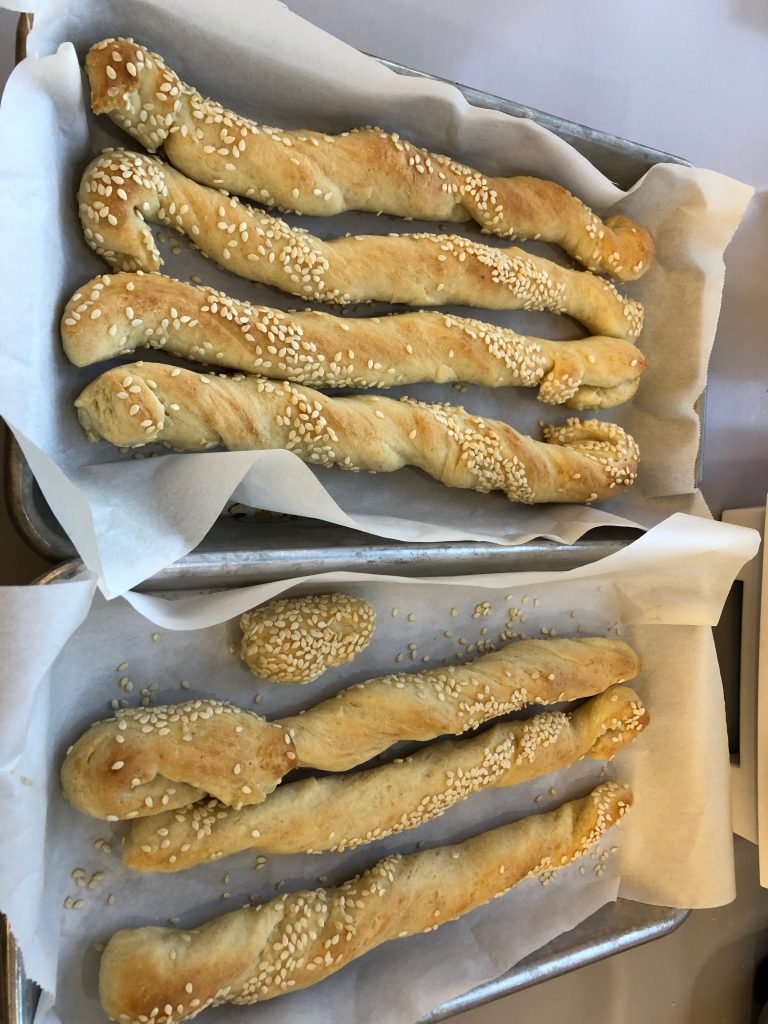
Shortly after the rectangle was formed, we took a knife and made long thin rectangles which we then rolled into snake-shaped pieces of dough. These pieces were then covered by sesame seeds on one side and twisted them. After that, we set them on the pans and let them rise for 15 minutes before baking them at 425 degrees Fahrenheit for about 11-12 minutes.
The picture above shows our finished breadsticks.
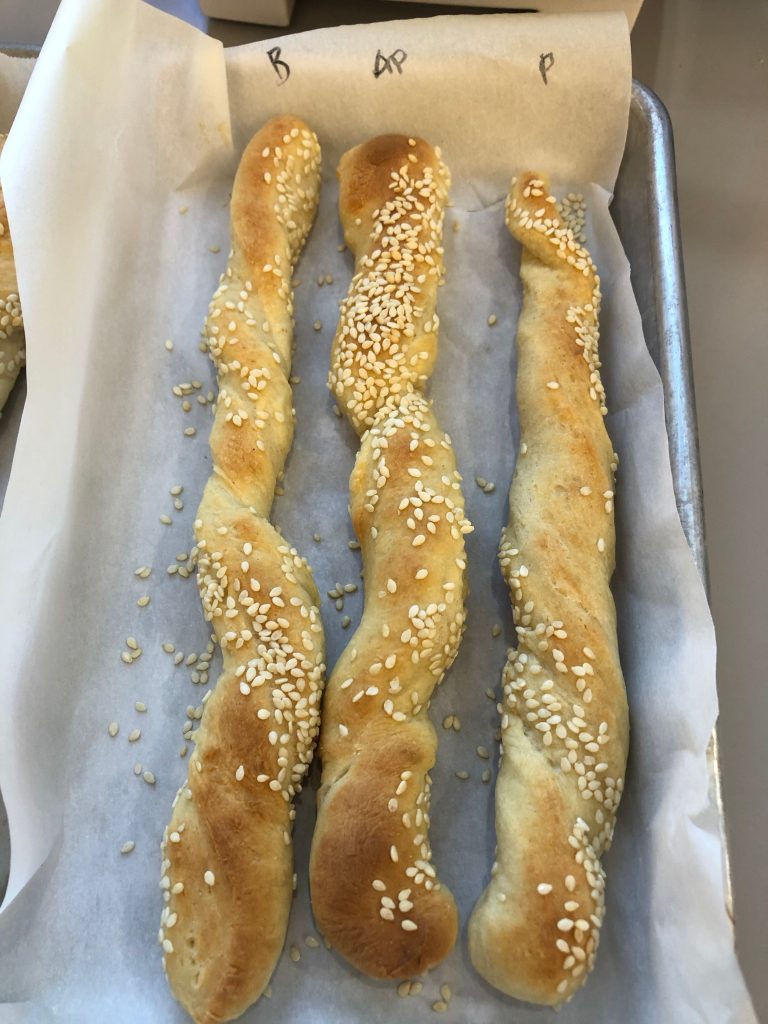
The left breadstick used bread flour, the middle used all-purpose, and the right used pastry.
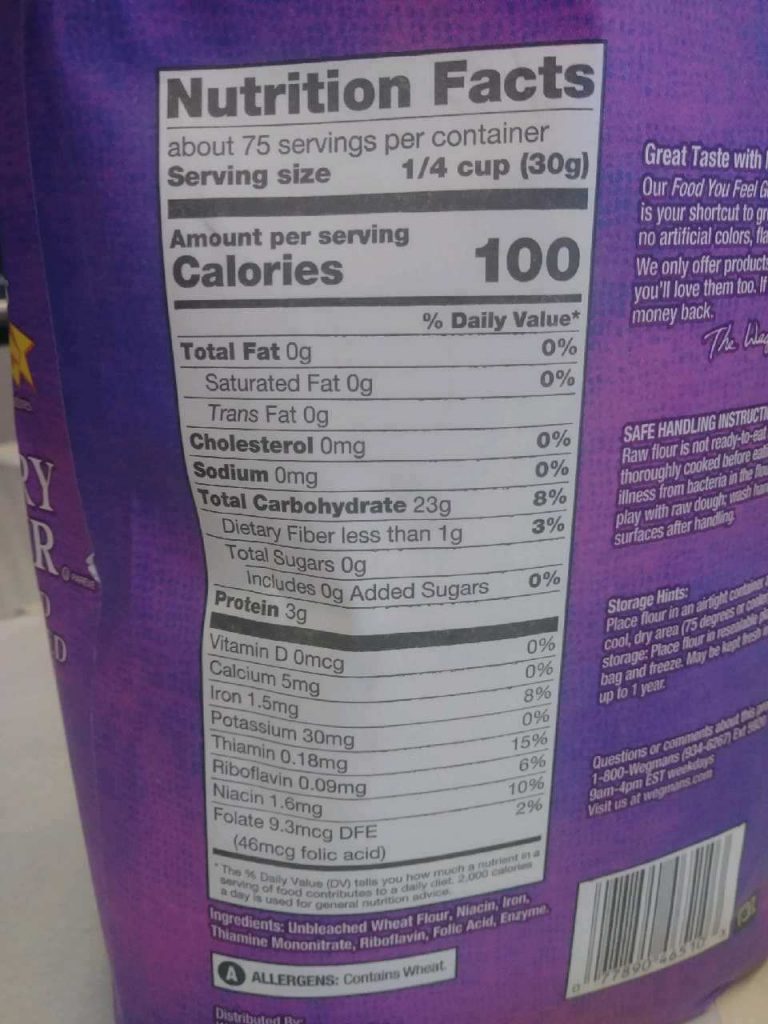
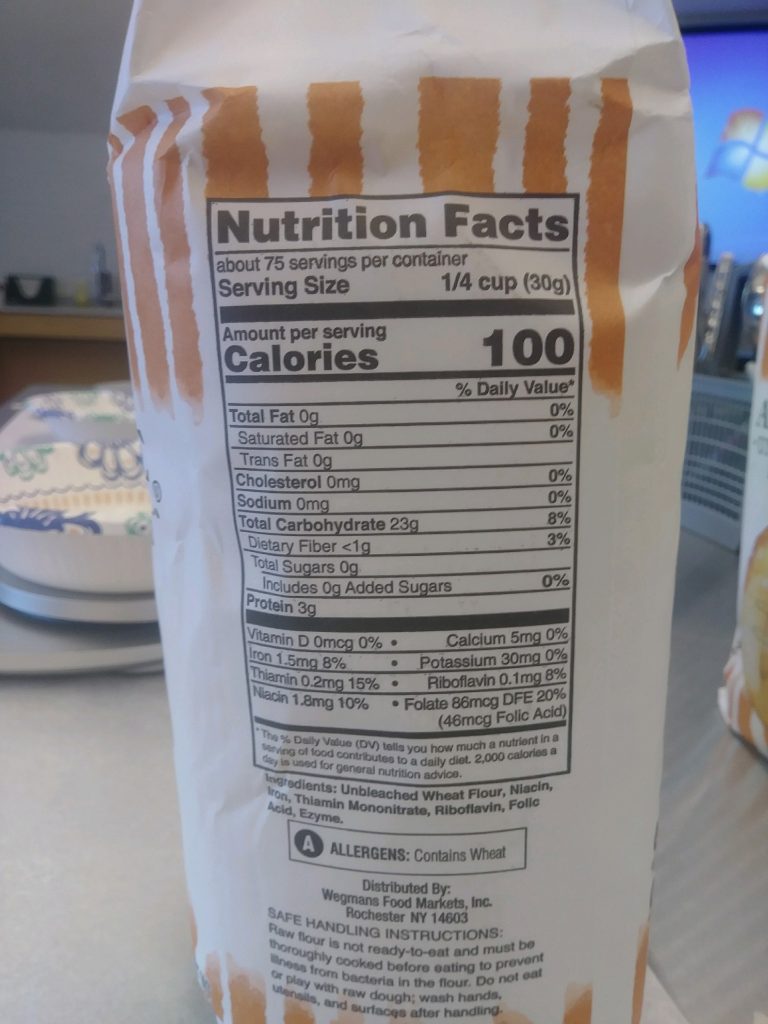
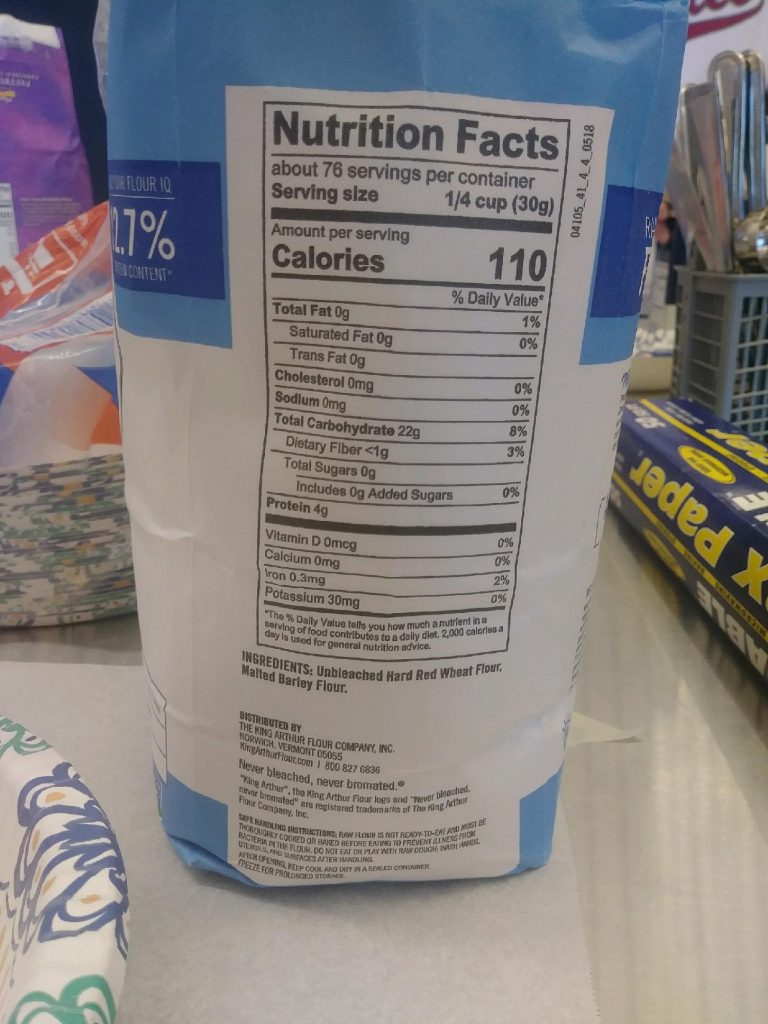
Although on the nutrition facts of the flours, the pastry flour and the all-purpose flour had the same protein (3 grams) while the bread flower had 4 grams, the protein percentages that they are supposed to be are-
Bread: 10.5%-12.0%.
All-purpose: 9.0% – 11.0%.
Pastry: 8.5%-10%
The higher the protein percentage means harder, chewier bread. The proteins in bread are glutenin and gliadin, which bind when water is added and make the bread strong, and therefore chewy. In the video, we had ranked the different breadsticks from most chewy to least chewy, All-purpose, bread, and then pastry. However, the bread technically should have been the chewiest, which we had credited its lack of chewiness on it being undercooked.
TYPES OF FLOUR